



CYP11
CYP11 enzymes play a pivotal role in steroidogenesis by catalyzing essential hydroxylation steps in cortisol and aldosterone biosynthesis[1][2][3]. CYP11A1 mediates the first and rate-limiting step, converting cholesterol to pregnenolone under cAMP-dependent transcriptional regulation in adrenal cortex and gonads[2][4][8]. CYP11B1 and CYP11B2 carry out 11β-hydroxylation in the zona fasciculata and zona glomerulosa, respectively, producing cortisol and aldosterone with isoform-specific physiological outcomes[1][3][5][6]. Mechanistically, overproduction of cortisol by CYP11B1 contributes to Cushing's syndrome, whereas excessive aldosterone via CYP11B2 drives hypertension and end-organ damage[1][6][10]. Compared with CYP11B1, CYP11B2 displays distinct substrate specificity and regulation, enabling selective pharmacological targeting for cardiovascular and renal disease models[1][7][11]. In experimental applications, recombinant yeast and mammalian cell systems have been developed to screen isoform-selective inhibitors, such as SIAS-1 for CYP11B2 and emerging CYP11B1 inhibitors, facilitating preclinical evaluation of steroidogenesis modulation[7][10]. Opevesostat, a CYP11A1 inhibitor, demonstrates translational potential in suppressing androgen-dependent tumor growth, highlighting CYP11 isoforms as viable therapeutic targets[8][9]. Therefore, understanding the precise functional distinctions and pathway-specific roles of CYP11 isoforms informs both disease mechanism studies and the rational design of selective modulators.
References:
- [1]. Bernhardt R. The potential of targeting CYP11B. Expert Opin Ther Targets. 2016 Aug;20(8):923-34. doi: 10.1517/14728222.2016.1151873. Epub 2016 Mar 2. PMID: 26854589. et al. The potential of targeting CYP11B. Expert Opin Ther Targets. 2016 Aug;20(8):923-34. [Content Brief]
- [2]. Guo IC, et al. Transcriptional regulation of CYP11A1. J Biomed Sci. 2003;10(6 Pt 1):593-8. [Content Brief]
- [3]. Zearo S, et al. Activities of CYP11B isoforms from different species. J Steroid Biochem Mol Biol. 2002;81(3):255-260.
- [4]. Seals RC, et al. Up-regulation of basal transcriptional activity of the cytochrome P450 cholesterol side-chain cleavage (CYP11A) gene by isoform-specific calcium-calmodulin-dependent protein kinase in primary cultures of ovarian granulosa cells. Endocrinology. 2004 Dec;145(12):5616-22. [Content Brief]
- [5]. White PC, et al. Steroid 11β-hydroxylase isozymes (CYP11B1 and CYP11B2). In: Schenkman JB, Greim H, editors. Cytochrome P450. Handbook of Experimental Pharmacology. 1993;105:641-650.
- [6]. Kot M, et al. Erratum to \"Altered cytokine profile under control of the serotonergic system determines the regulation of CYP2C11 and CYP3A isoforms\" [Food Chem. Toxicol. 116 Part B (2018) 369-378]. Food Chem Toxicol. 2018 Aug;118:471-472. [Content Brief]
- [7]. Bureik M, et al. Development of test systems for the discovery of selective human aldosterone synthase (CYP11B2) and 11beta-hydroxylase (CYP11B1) inhibitors. Discovery of a new lead compound for the therapy of congestive heart failure, myocardial fibrosis and hypertension. Mol Cell Endocrinol. 2004 Mar 31;217(1-2):249-54. doi: 10.1016/j.mce.2003.10.027. PMID: 15134825. [Content Brief]
- [8]. Hao X, et al. Electromagnetic Functional Properties of Flexible Picosecond Laser-Induced Graphene Films Modified with Silver Nanoparticles. ACS Appl Mater Interfaces. 2026 May 27;18(20):28957-28968. [Content Brief]
- [9]. Qiu J, et al. A Novel CYP2E1 Inhibitor, 4-Methyl-5-Acetylthiazole (Q11), Alleviates Obesity Via Modulating Adipose Inflammation and Mitochondrial Dysfunction. Adv Sci (Weinh). 2026 Feb;13(10):e15315. [Content Brief]
- [10]. Yazawa T, et al. Cyp11b1 is induced in the murine gonad by luteinizing hormone/human chorionic gonadotropin and involved in the production of 11-ketotestosterone, a major fish androgen: conservation and evolution of the androgen metabolic pathway. Endocrinology. 2008 Apr;149(4):1786-92. [Content Brief]
- [11]. Cui X, et al. A novel human cytochrome P450 4F isoform (CYP4F11): cDNA cloning, expression, and genomic structural characterization. Genomics. 2000 Sep 1;68(2):161-6. [Content Brief]
- [12]. Fizazi K, et al. Phase 3 trial of CYP11A1 inhibitor opevesostat versus alternative androgen receptor pathway inhibitor in patients with metastatic castration-resistant prostate cancer. J Clin Oncol. 2026;44(7_suppl):TPS299.
- [13]. Yu GX, et al. 4-Methyl-5-Acetylthiazole (Q11), a novel CYP2E1 inhibitor, has a protective effect on the hepatotoxicity induced by acetaminophen. Bioorg Chem. 2026 Mar;170:109492. [Content Brief]
- [14]. Gao N, et al. The CYP2E1 inhibitor Q11 ameliorates LPS-induced sepsis in mice by suppressing oxidative stress and NLRP3 activation. Biochem Pharmacol. 2023 Aug;214:115638. [Content Brief]
- [15]. Narita M, et al. Immunohistochemical characterization of calf pneumonia produced by the combined endobronchial administration of bovine herpesvirus 1 and Pasteurella haemolytica. J Comp Pathol. 2000 Aug-Oct;123(2-3):126-34. [Content Brief]
- [16]. Zhu W, et al. Inhibitors of 11β-Hydroxylase (CYP11B1) for Treating Diseases Related to Excess Cortisol. Curr Med Chem. 2016;23(6):623-33. [Content Brief]
- [17]. Liu Y, et al. Discovery of 3-Pyridyl Isoindolin-1-one Derivatives as Potent, Selective, and Orally Active Aldosterone Synthase (CYP11B2) Inhibitors. J Med Chem. 2020 Jul 9;63(13):6876-6897. [Content Brief]
- [18]. Bureik M, et al. Development of test systems for the discovery of selective human aldosterone synthase (CYP11B2) and 11beta-hydroxylase (CYP11B1) inhibitors. Discovery of a new lead compound for the therapy of congestive heart failure, myocardial fibrosis and hypertension. Mol Cell Endocrinol. 2004 Mar 31;217(1-2):249-54. [Content Brief]
- [19]. Kot M, et al. Altered cytokine profile under control of the serotonergic system determines the regulation of CYP2C11 and CYP3A isoforms. Food Chem Toxicol. 2018 Jun;116(Pt B):369-378. [Content Brief]
- [20]. Zhang C, et al. Q11, a CYP2E1 inhibitor, exerts anti-hepatocellular carcinoma effect by inhibiting M2 macrophage polarization. Cancer Immunol Immunother. 2024 Dec 30;74(1):35. [Content Brief]
All Product Categories
-
CYP11 Related Products (13)
Related Products (13)

-
Antibodies (1)
- 1
-
Levoketoconazole
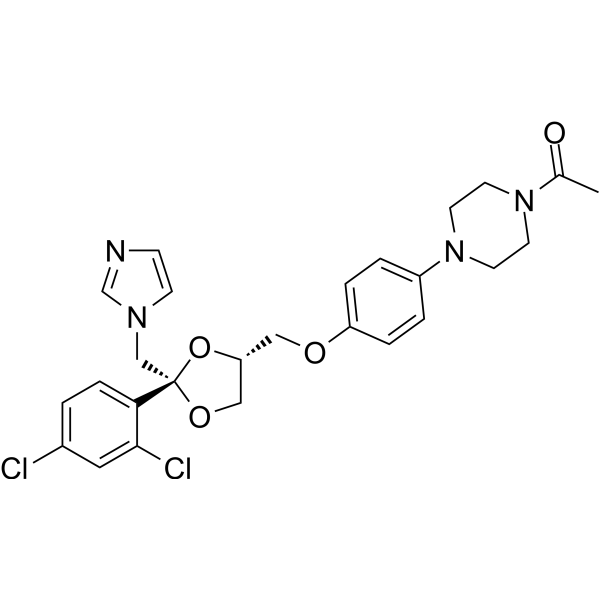 0 ImagesSynonyms: (-)-Ketoconazole; (-)-Ketoconazol; (-)-R 41400Levoketoconazole ((-)-Ketoconazole) is the 2S,4R enantiomer derived from racemic Ketoconazole (HY-B0105). Levoketoconazole is a potent and orally active cortisol synthesis inhibitor. Levoketoconazole inhibits key steps in cortisol and testosterone synthesis by inhibiting CYP11B1, CYP11A1, and CYP17A1. Levoketoconazole can be used for research on endogenous Cushing’s syndrome.
-
Lapiteronel
 0 ImagesSynonyms: CFG920Lapiteronel (CFG920) is an orally active, nonsteroidal, reversible dual CYP17 and CYP11B2 inhibitor. Lapiteronel has the potential for metastatic castration-resistant prostate cancer research.
-
Pentacosafluorotridecanoic Acid
 0 ImagesCat. No.: HY-W679754CAS No.: 72629-94-8Synonyms: PFTrDAPentacosafluorotridecanoic Acid (PFTrDA) is a long-chain perfluoroalkyl carboxylic acid with strong endocrine-disrupting activity. Pentacosafluorotridecanoic Acid exhibits estrogenic effects and disrupts vtg1 transcription as well as sex hormone homeostasis in male Danio rerio. Pentacosafluorotridecanoic Acid disturbs steroidogenesis and HPG axis function in a sex-dependent pattern. Pentacosafluorotridecanoic Acid inhibits CYP17A and CYP11A1 to reduce testosterone and increase E2/T ratio in H295R cells. Pentacosafluorotridecanoic Acid triggers gender-specific immunomodulation after prenatal exposure. Pentacosafluorotridecanoic Acid correlates with lower eczema risk in female infants. Pentacosafluorotridecanoic Acid can be used for the research of endocrine disruption and eczema.
-
BI 689648
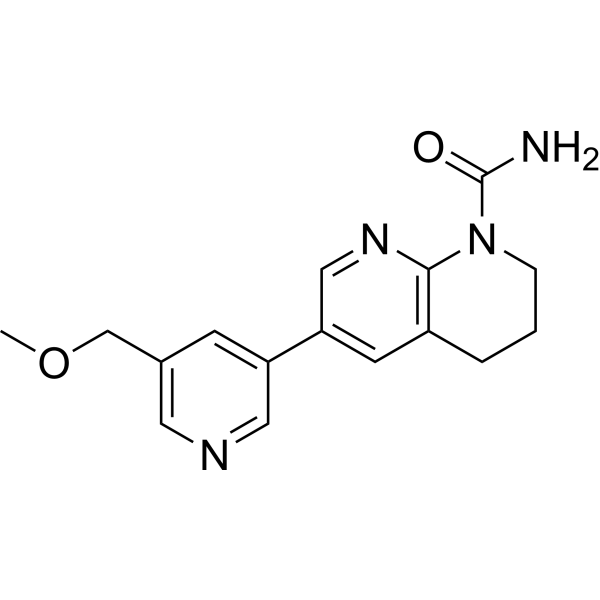 0 ImagesBI 689648 is a novel, highly selective aldosterone synthase inhibitor which can inhibit CYP11B1 and CYP11B2 with IC50s of 310 and 2.1 nM, respectively.
-
CYP11B2-IN-1
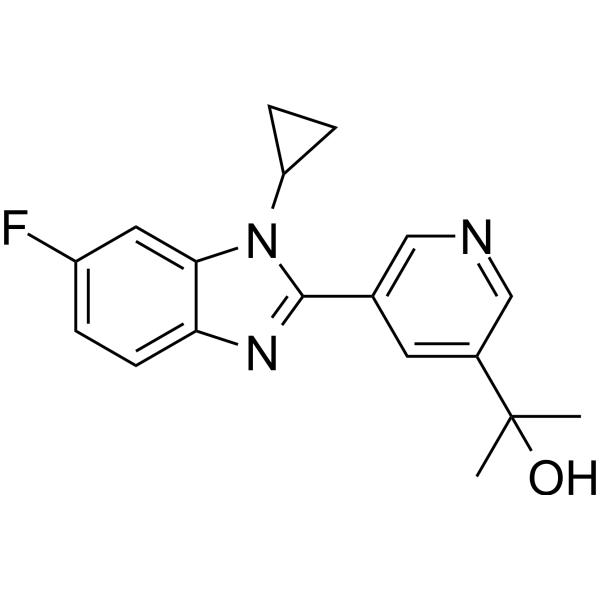 0 ImagesCYP11B2-IN-1 is a CYP11B2 inhibitor with an IC50 of 2.3 nM. CYP11B2-IN-1 inhibits CYP11B1 with an IC50 of 142 nM.
-
CYP11B1-IN-1
 0 ImagesCat. No.: HY-122744CAS No.: 2101952-78-5CYP11B1-IN-1 is a selective, orally active hCYP11B1 inhibitor, with an IC50 of 2 nM against hCYP11B1 and an IC50 of 1.8 μM against rat CYP11B1. CYP11B1-IN-1 can be used for the research of Cushing's disease.
-
CYP11B1-IN-2
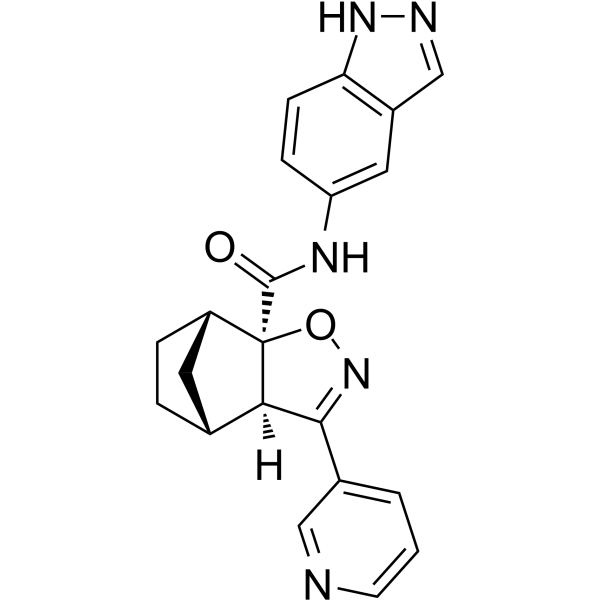 0 ImagesCat. No.: HY-151140CAS No.: 3031098-46-8CYP11B1-IN-2 (compound 7aa) is an orally active, potent and selective CYP11B1 inhibitor, with IC50 values of 9 nM and 25 nM for human CYP11B1 and rat CYP11B1, respectively. CYP11B1-IN-2 can be used for the research of diseases caused by excessive cortisol.
-
CYP11A1-IN-2
 0 ImagesCat. No.: HY-179686CAS No.: 3057862-18-4CYP11A1-IN-2 (Compound 61) is a selective cholesterol side-chain cleavage enzyme (CYP11A1) inhibitor. CYP11A1-IN-2 can inhibitor steroid biosynthesis and can be used for the research of steroid hormone-dependent cancers, such as prostate cancer.
-
CYP11A1-IN-3
 0 ImagesCat. No.: HY-181747CYP11A1-IN-3 (Compound II-4) is a selective CYP11A1 inhibitor with an IC50 of 26.7 nM. CYP11A1-IN-3 shows selectivity towards CYP1A2, 2C9 and 2D6. CYP11A1-IN-3 can be used for the research of castration-resistant prostate cancer.
-
CYP11B2-IN-3
 0 ImagesCat. No.: HY-176480CAS No.: 3072732-90-9CYP11B2-IN-3 (compound 32) is an orally active and selective CYP11B2 inhibitor with IC50 values of 12.92 nM and 2341 nM for CYP11B2 and CYP11B1, respectively. CYP11B2-IN-3 can be used for study of hypertension.
-
Pentacosafluorotridecanoic Acid (Standard)
 0 ImagesCat. No.: HY-W679754RCAS No.: 72629-94-8Synonyms: PFTrDA (Standard)Pentacosafluorotridecanoic Acid (Standard) is the analytical standard of Pentacosafluorotridecanoic Acid (PFTrDA) (HY-W679754). This product is intended for research and analytical applications.Pentacosafluorotridecanoic Acid is a long-chain perfluoroalkyl carboxylic acid with strong endocrine-disrupting activity. Pentacosafluorotridecanoic Acid exhibits estrogenic effects and disrupts vtg1 transcription as well as sex hormone homeostasis in male Danio rerio. Pentacosafluorotridecanoic Acid disturbs steroidogenesis and HPG axis function in a sex-dependent pattern. Pentacosafluorotridecanoic Acid inhibits CYP17A and CYP11A1 to reduce testosterone and increase E2/T ratio in H295R cells. Pentacosafluorotridecanoic Acid triggers gender-specific immunomodulation after prenatal exposure. Pentacosafluorotridecanoic Acid correlates with lower eczema risk in female infants. Pentacosafluorotridecanoic Acid can be used for the research of endocrine disruption and eczema.
-
CYP11B2-IN-2
 0 ImagesCat. No.: HY-162574CAS No.: 2241573-22-6CYP11B2-IN-2 (Compound 10k) is an inhibitor for enzyme aldosterone synthase CYP11B2 with an IC50 of 0.3 nM. CYP11B2-IN-2 CYP11B-IN-2 is labeled with 18F and can be used as a positron emission tomography (PET) tracer for the diagnosis of primary aldosteronism.
-
Aldoview
 0 ImagesAldoView (Compound 3) is an intermediate. AldoView can be labeled with fluorine-18 to synthesize [18F]AldoView. [18F]AldoView is a highly selective aldosterone synthase PET imaging agent. AldoView can be used in imaging studies of primary aldosteronism.
- 1




